

Raynaud’s is often associated with cold fingers, but the condition can affect other peripheral areas as well. The toes, nose, and ears can also become unusually cold or show temporary changes during an episode.
Understanding these areas matters because symptoms outside the fingers can be easy to overlook or mistaken for ordinary cold exposure. The important point is that Raynaud’s is not limited to the hands.
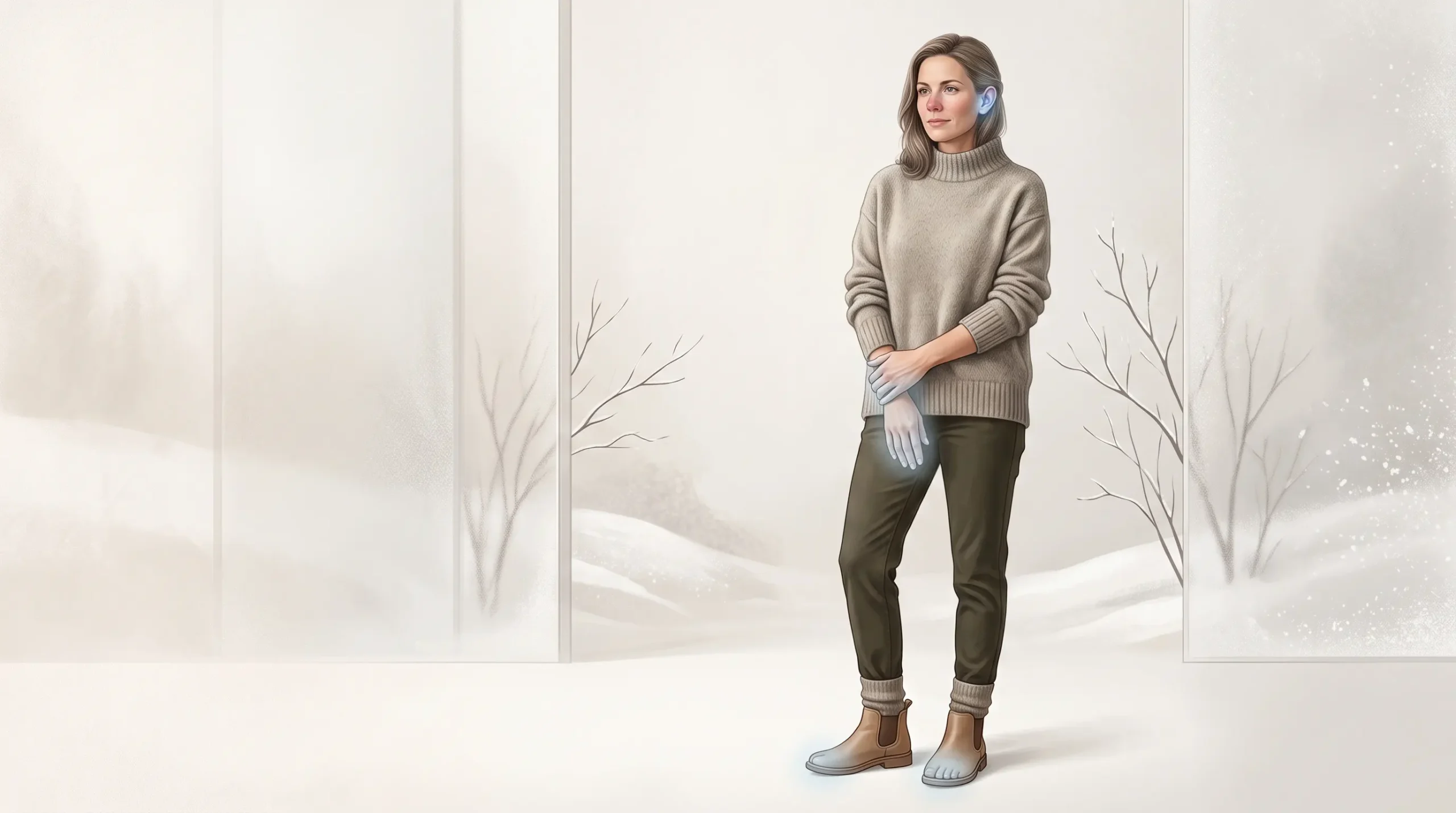
Why Can Raynaud’s Affect More Than the Fingers?
Raynaud’s involves changes in blood flow in small blood vessels in peripheral areas of the body. The fingers are commonly affected, but they are not the only areas where these changes can occur.
This is why someone may notice symptoms in the toes, nose, or ears, particularly when exposed to cold temperatures. The American College of Rheumatology notes that Raynaud’s can affect the fingers and toes and may also affect the nose and ears.
For a basic explanation of the condition itself, understanding what Raynaud’s is provides useful background before looking at areas beyond the fingers.
What Happens When Raynaud’s Affects the Toes?
The toes can be affected in much the same general way as the fingers. During an episode, they may feel unusually cold or numb, and the skin may temporarily change color.
Toe symptoms can be particularly noticeable in cold environments because the feet are already exposed to substantial heat loss. Cold footwear, cold floors, outdoor temperatures, or sudden temperature changes may make the sensation more noticeable.
The NHS also identifies the toes as an area that can be affected by Raynaud’s, alongside the fingers and other peripheral areas.
Someone may therefore experience cold or uncomfortable toes even when the rest of the body feels reasonably warm.
How Can Raynaud’s Affect the Nose?
The nose is another peripheral area that can be affected by Raynaud’s. Because it is directly exposed to the surrounding environment, cold air can make changes in temperature or sensation especially noticeable.
A person may notice that the nose feels unusually cold, numb, or uncomfortable during exposure to cold conditions. These sensations can occur alongside changes affecting the fingers or toes, but they do not have to occur at exactly the same time.
The nose is also easy to overlook because people often associate Raynaud’s primarily with the hands.
How Can Raynaud’s Affect the Ears?
The ears can also become unusually cold when exposed to low temperatures. As with the nose, their location and relatively exposed position make them particularly noticeable in cold weather.
When Raynaud’s affects the ears, a person may notice coldness, numbness, or temporary color changes. The experience can differ from the more familiar symptoms in the fingers.
For this reason, symptoms involving the ears should be considered as part of the broader range of peripheral symptoms rather than assuming that Raynaud’s must always involve the hands.
Do the Toes, Nose, and Ears Have the Same Symptoms?
Not necessarily. The general pattern can involve coldness, numbness, or temporary changes in skin color, but the way symptoms is noticed can depend on the location.
For example, cold toes may be noticed when putting on shoes or walking outdoors, while a cold nose or ears may become obvious almost immediately in cold air.
The symptoms can also vary in intensity and duration. A broader overview of the symptoms of Raynaud’s can help put these different sensations and visible changes into context.
Why Are Symptoms Outside the Fingers Easy to Miss?
There are several reasons why symptoms affecting the toes, nose, or ears may receive less attention.
First, coldness in these areas can seem normal during winter or other cold conditions. Second, people often learn about Raynaud’s through examples involving the fingers, which can create the impression that the hands are the only area involved.
This can make it easier to overlook a recurring pattern involving another peripheral area.
A single episode of coldness does not by itself establish that the symptoms are related to Raynaud’s. What matters is the overall pattern of symptoms and the circumstances in which they occur.
Can Raynaud’s Affect Several Areas at the Same Time?
Yes. Raynaud’s can affect more than one peripheral area, although the combination and timing of symptoms can vary.
For example, someone may notice changes in the fingers and toes during the same period of cold exposure. Another person may mainly notice symptoms in the fingers while occasionally experiencing similar sensations in the ears or nose.
There is no requirement for every potentially affected area to show symptoms during every episode.
What Does It Mean If Only the Toes, Nose, or Ears Are Affected?
Symptoms outside the fingers can still be relevant when considering Raynaud’s, but the location of symptoms alone does not establish a diagnosis.
Other conditions and ordinary responses to cold can also cause coldness, numbness, or changes in skin color. This is why the overall pattern, history, and other symptoms matter when interpreting what a person experiences.
The distinction between primary and secondary Raynaud’s is also important when considering the broader clinical context, rather than judging the condition from the location of symptoms alone.
Can Raynaud’s Affect Your Toes, Nose or Ears? The Short Answer
Yes. Raynaud’s can affect the toes, nose, and ears as well as the fingers. Symptoms may include unusual coldness, numbness, or temporary color changes, and the affected areas can vary from person to person. Raynaud’s is therefore not limited to the fingers or hands.
Frequently Asked Questions
Can Raynaud’s affect the toes?
Yes. The toes can become unusually cold or numb and may temporarily change color during a Raynaud’s episode.
Can Raynaud’s affect the nose?
Yes. The nose can be affected and may feel unusually cold or numb during exposure to cold conditions.
Can Raynaud’s affect the ears?
Yes. The ears can also become unusually cold or numb and may show temporary color changes.
Does Raynaud’s always affect the fingers?
No. The fingers are commonly affected, but Raynaud’s can also involve other peripheral areas such as the toes, nose, and ears.
Can Raynaud’s affect several areas at once?
Yes. More than one peripheral area can be affected, although the combination and timing of symptoms can vary from person to person.
Are cold toes or ears always caused by Raynaud’s?
No. Cold exposure and other conditions can also cause coldness or numbness. The location of symptoms alone does not establish that they are caused by Raynaud’s.
Medical note: This article provides general educational information about Raynaud’s and areas of the body that may be affected. It is not intended to diagnose, treat, or replace professional medical advice. If you have persistent, severe, or concerning symptoms, discuss them with a qualified healthcare professional.