How Ololar Heated Gloves Are Designed for Raynaud’s
Targeted Thermal Distribution Technology
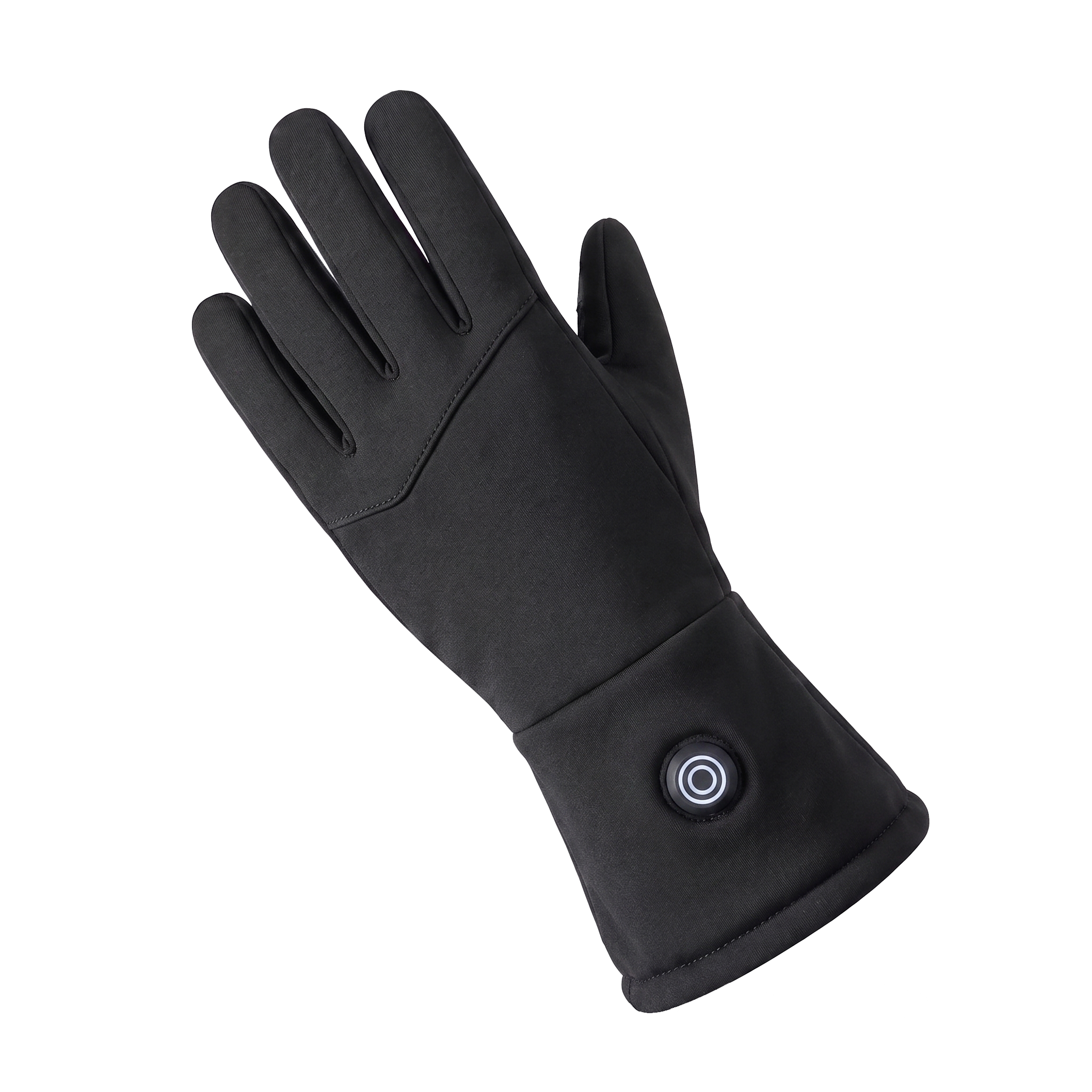
Raynaud’s attacks are commonly triggered by cold and sudden temperature changes, and they most often affect the fingers. Ololar gloves combine a dual-sided heating architecture, with heating across the back of the hand, fingers and palm, and temperature levels, heating-zone layout, materials and fit, and control logic tuned by Ololar for cold-sensitive hands. Together, this is Targeted Thermal Distribution Technology.
- Designed for: people with Raynaud’s and cold-sensitive hands
- Heating: dual-sided architecture adopted from our manufacturing partner, across the back of the hand, fingers and palm
- Tuned by Ololar: temperature levels, heating-zone layout, materials and fit, control logic
- Evaluated: with a hospital rheumatology department since 2018
Ololar gloves are not intended to diagnose, treat or prevent any medical condition. If you have symptoms of Raynaud’s, talk to your doctor.
Why Raynaud’s Calls for Purpose-Built Heated Gloves
Raynaud’s narrows the small blood vessels that supply the fingers, so cold can quickly leave them pale, numb and painful. Ordinary gloves only slow heat loss, and heated gloves made for snow sports are built for a different problem. Four things set Raynaud’s apart.
Attacks follow temperature change, not just cold
Cold is the most common trigger, and it is often the change in temperature that sets an attack off. How quickly and steadily warmth arrives matters as much as how hot a glove can get.
The fingers need the warmth
Raynaud’s limits blood flow to the skin of the fingers, which are often the first to turn cold, white or blue. Warmth has to actually reach the fingers, not only the palm or the back of the hand.
More heat is not always better
Too much heat can leave hands damp, and moisture that evaporates cools the skin again. Controlled, steady warmth suits cold-sensitive hands better than warmth that simply runs hot.
Daily life needs dexterity
Cold shows up in ordinary places: air-conditioned offices, supermarket aisles, a cold commute. Bulky gloves are hard to keep wearing, so heated gloves need to stay slim enough for typing, phones and everyday tasks.
General information, not medical advice. Ololar gloves are not intended to diagnose, treat or prevent any medical condition.
Design Decisions, and the Raynaud’s Problem Behind Each
Each decision below responds to one of the challenges above. Ololar tuned the heating-zone layout, fit and series structure of its gloves around them.
| Design decision | Raynaud’s challenge | How Ololar responds |
|---|---|---|
| Heating-zone layout | The fingers need the warmth | Heating runs across the back of the hand, the fingers (including the thumb and fingertips) and the palm, so warmth reaches the fingers instead of stopping at the palm. |
| Three series, one for each level of cold exposure | Attacks follow temperature change, not just cold | Different environments call for different levels of warmth, so Ololar offers Air, Flex and Shield rather than one glove for everything. Recommended ambient temperatures are 5°C and above, -5°C and above, and -15°C and above. The ranges are based on measured results and set conservatively. |
| Three heat levels on every model | More heat is not always better | Every Ololar glove has Low, Medium and High, so wearers can match warmth to the environment instead of defaulting to full heat. |
| Fit and finger access | Daily life needs dexterity | Every model is touchscreen compatible. Air is the thinnest in the range, using 0.2 mm fabric, and is built for flexibility. Flex comes in two versions: one with full-finger coverage, and one with magnetic flip-back caps that expose one section of the thumb and two sections of the index finger, so many everyday tasks can be done without taking the gloves off. |
How the Design Evolved: Four Generations
Each generation started from what the previous one taught us about Raynaud’s and cold-sensitive hands.
-
01Generation 1
Heating the back of the hand
- Back of hand heated
- Fingers not heated
- Palm not heated
- Goal
- Keep hands warm.
- What we found
- Raynaud’s often shows up in the fingers, and a heat source on the back of the hand did not reach the fingers well.
-
02Generation 2
Adding finger heating
- Back of hand heated
- Fingers heated
- Palm not heated
- Change
- Added heat sources in the fingers.
- What we found
- The glove could not keep the whole hand at a balanced temperature.
-
03Generation 3
A dual-sided heating architecture
- Back of hand heated
- Fingers heated
- Palm heated
- Change
- Adopted a dual-sided heating architecture from our manufacturing partner, with heating across the back of the hand, fingers and palm.
- What we found
- It delivered the balanced warmth we were aiming for, but the glove felt heavy, and too many everyday situations were out of reach.
-
04Generation 4CURRENT RANGE
Layering the range by use scenario
- Back of hand heated
- Fingers heated
- Palm heated
- Change
- Instead of one glove for everything, three series for different use scenarios: Air, Flex and Shield.
- Result
- Support for Raynaud’s and cold-sensitive hands across the day, from indoor typing to extended time in the cold.
OLOLAR TECHNOLOGY
Heating System Architecture
A complete wearable heating system engineered from energy delivery to targeted thermal distribution.
Power Source
Stable energy delivery designed for consistent heating performance.
Intelligent Control
Heat levels are regulated according to different environments and activities.
Heating Element
Advanced heating materials convert electrical energy into responsive warmth.
Core Thermal Architecture
Dual-Sided Heating
Heat is distributed across both sides of the hand, extending warmth toward the palm, fingers, and back of hand.
Thermal Comfort
A balanced warming experience designed for cold-sensitive hands.
Technology Foundation
Ololar’s dual-sided heating architecture is built on heating technology developed by J ONE , and adapted to Ololar’s heated glove designs for cold-sensitive hands.
From Energy to Full-Hand Warmth
Every layer of the system works together to create controlled, balanced warmth where it matters most.
Designed Around
How Hands
Lose Heat.
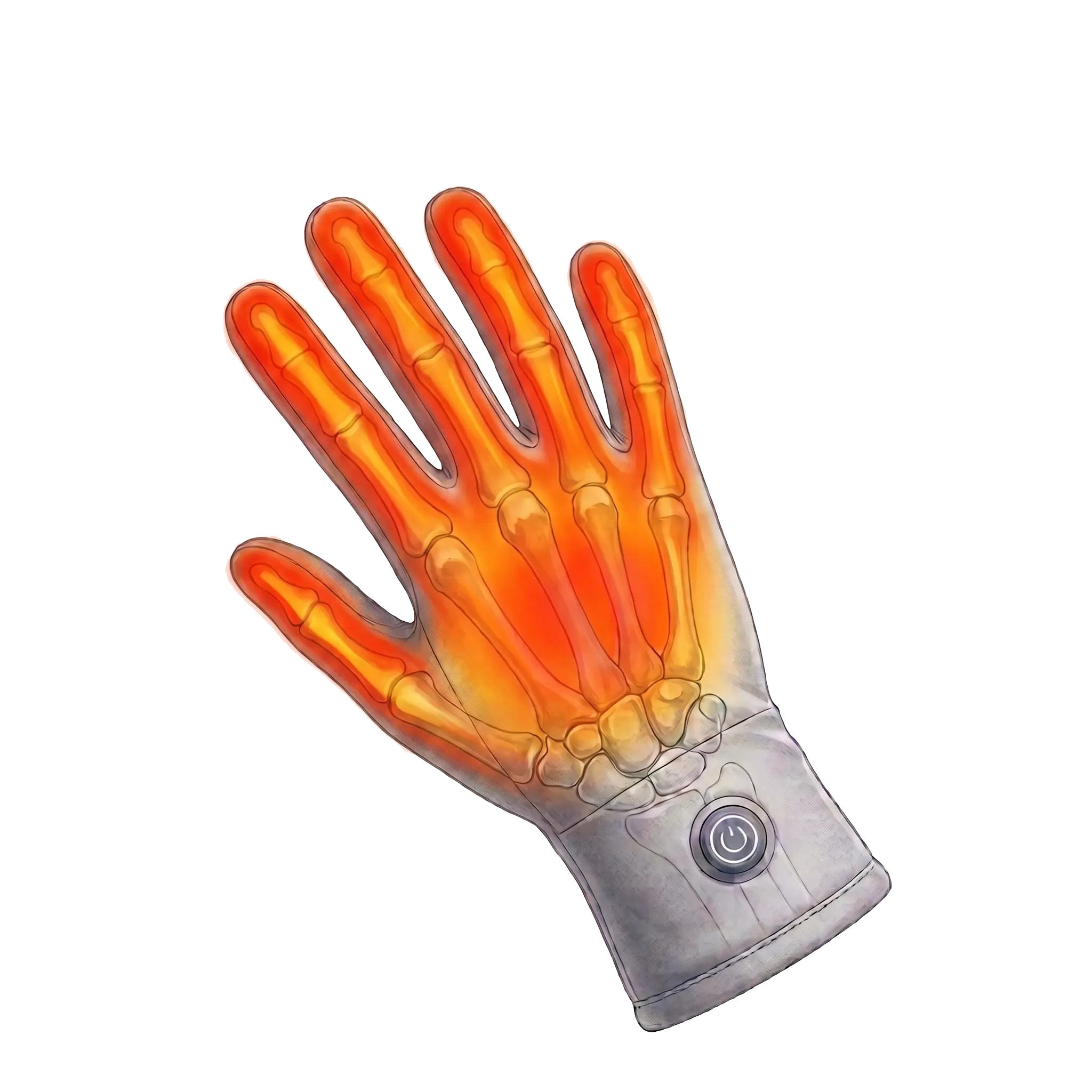
Cold-sensitive hands lose warmth unevenly. Every thermal zone is engineered to deliver warmth where it matters most.
Fingertips
Continuous warmth where cold is felt first.
Palm & Back
Dual-zone heating for balanced warmth distribution.
Thermal Balance
Warmth is managed across the hand’s heating zones to maintain a steady, comfortable level — not simply the highest temperature.
Technology That Understands Your Hands.
From the first touch of cold to lasting comfort,
Ololar creates warming solutions designed for
people with cold-sensitive hands.
What Raynaud’s Calls For,
and How Ololar Responds
Ololar starts with how Raynaud’s and cold-sensitive hands experience cold. That shapes how we design the heating system, from where the heat goes to how much of it you choose to use.
What Raynaud’s Calls For
- Heating that reaches the fingertips. The Raynaud’s Association notes that some heated gloves neglect heating down to the fingertips, which it calls an important feature for people with Raynaud’s
- Warmth that is balanced across the whole hand rather than concentrated in one area
- Heat you can match to the environment, because more heat is not always better
- A slim, flexible fit. The same Raynaud’s Association post lists bulky design and poor dexterity among the drawbacks of heated gloves for everyday use
How Ololar Responds
- Carbon-fiber composite heating elements follow the contours of each finger and extend across the palm and the back of the hand, so warmth runs along the fingers, including the thumb and fingertips
- A dual-sided heating architecture, adopted from our manufacturing partner and tuned by Ololar, covers the back of the hand, fingers and palm for balanced warmth across the hand
- Three heat levels on every model — Low, Medium and High — so warmth can be matched to the environment
- Air is the thinnest in the range, using 0.2 mm fabric. Every model is touchscreen compatible, and one Flex version has flip-back caps for the thumb and index finger
Designed Around How Cold-Sensitive Hands Actually Behave
In Raynaud’s, the small blood vessels that supply the skin narrow in response to cold or stress, which limits blood flow to the affected areas. According to Mayo Clinic, it most commonly affects the fingers and toes, and affected areas may feel cold and numb until blood flow improves, usually after warming up. Mayo Clinic also notes that cold temperatures are the most likely cause of an attack, and that air conditioning can trigger one too.
Ololar’s dual-sided heating design, with carbon-fiber composite elements that follow the contours of each finger, is built around this. Warmth runs along the fingers, including the thumb and fingertips, and extends across the palm and the back of the hand. The Raynaud’s Association’s discussion of heated gloves points to fingertip heating as an important feature for people with Raynaud’s.
This is what we mean by technology designed around your hands. Not more heat — warmth placed where it counts.
Understanding Ololar’s Heating Technology
Ololar gloves heat the back of the hand, the fingers (including the thumb and fingertips) and the palm. The dual-sided heating architecture is adopted from our manufacturing partner, and Ololar tuned the temperature levels, heating-zone layout, materials and fit, and control logic for cold-sensitive hands.
Ololar gloves use carbon-fiber composite heating elements. The elements follow the contours of each finger and extend across the palm and the back of the hand, so warmth runs along the fingers as well as across the hand.
Yes. Every Ololar glove has three heat levels: Low, Medium and High.
On the Air series, High runs at 140–149°F (60–65°C) for 2–3 hours, Medium at 122–131°F (50–55°C) for 4–5 hours, and Low at 104–113°F (40–45°C) for 6–7 hours, on a 7.4 V, 2200 mAh battery. Flex also uses a 7.4 V, 2200 mAh battery, and Shield uses a 7.4 V, 3000 mAh battery. Actual temperature and runtime vary with ambient conditions. If you have reduced sensation in your hands, start on Low and check your skin regularly.
Air is for indoor use such as typing and writing, with a recommended ambient temperature of 5°C and above. Flex suits commuting, walking and shopping, with a recommended ambient temperature of -5°C and above. Shield is for snow removal, outdoor work and extended time in the cold, with a recommended ambient temperature of -15°C and above. The ranges are based on measured results and set conservatively. See the full comparison.
Every model is touchscreen compatible. Flex also comes in a flip-top version with magnetic flip-back caps that expose one section of the thumb and two sections of the index finger, so many everyday tasks can be done without taking the gloves off.
Raynaud’s often shows up in the fingers. The Raynaud’s Association notes that some heated glove brands neglect heating down to the fingertips, which it calls an important feature for people with Raynaud’s. Ololar gloves heat the fingers, including the thumb and fingertips, with elements that follow the contours of each finger.
No. Ololar gloves are designed to provide warmth and comfort. They are not intended to diagnose, treat, cure or prevent any medical condition. If you have symptoms of Raynaud’s, talk to your doctor.
Built Into Every Ololar Solution
Ololar’s heating architecture is applied across different solutions and products, with each designed for a specific balance of warmth, protection, flexibility, and cold exposure.
Explore Ololar Solutions →