

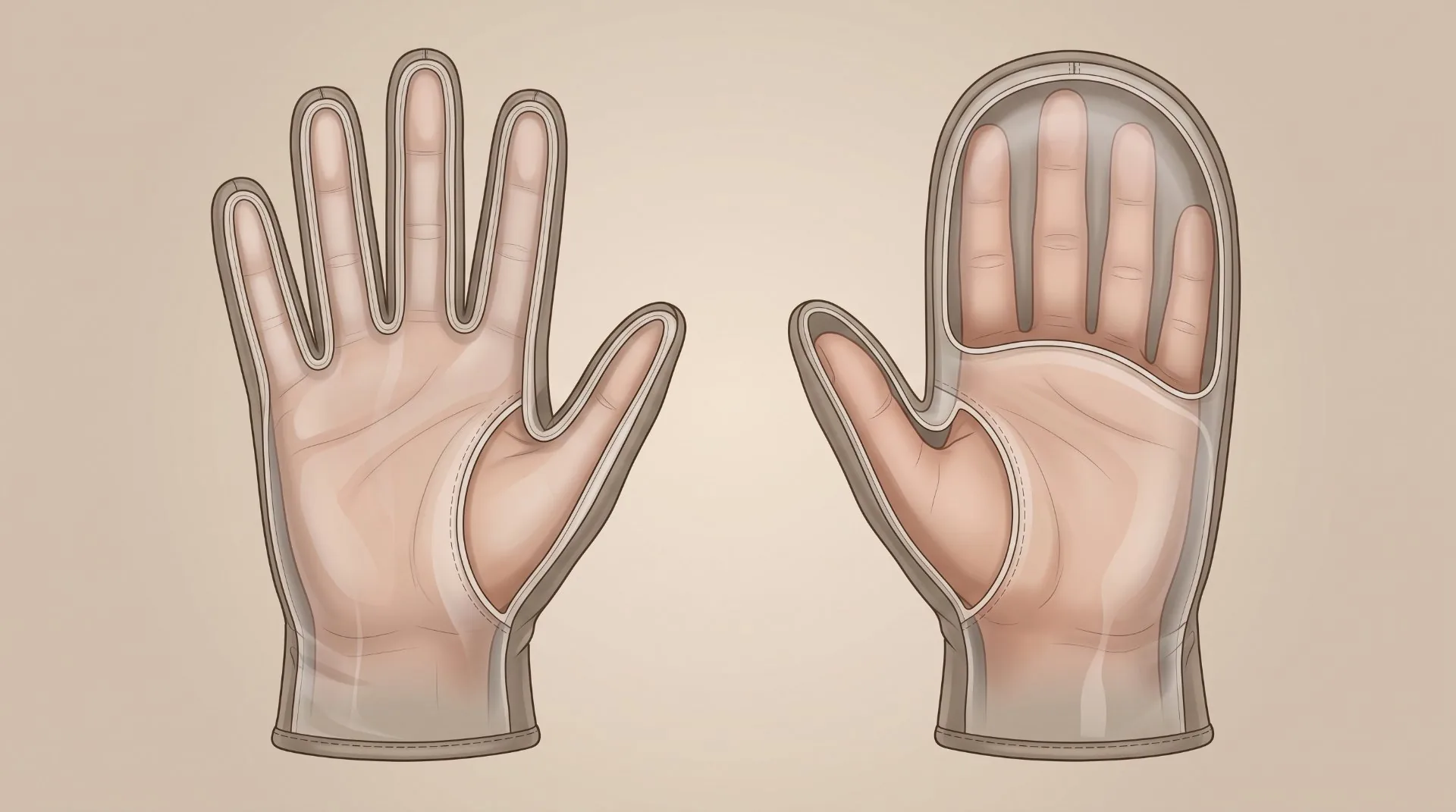
For people with Raynaud’s, choosing between gloves and mittens is a question of both thermal protection and finger function. The two designs protect the hand in different ways because they organize the fingers differently.
A conventional glove gives each finger its own compartment. A mitten places most of the fingers together in a shared compartment. This seemingly simple difference changes how much individual finger movement is available and how the fingers interact with the warmth retained inside the handwear.
For cold-sensitive hands, understanding that difference is more useful than simply asking whether gloves or mittens are “warmer.”
The Fundamental Difference: Separate Fingers vs. Fingers Together
The defining difference is the arrangement of the fingers.
Gloves separate the fingers. Each finger is surrounded by its own section of insulation and material. This allows the fingers to move independently and makes gloves suitable for activities that require precision.
Mittens keep most of the fingers together. Instead of giving every finger a separate compartment, they create a larger shared space. The fingers remain closer together, allowing warmth to be retained within the same enclosed area.
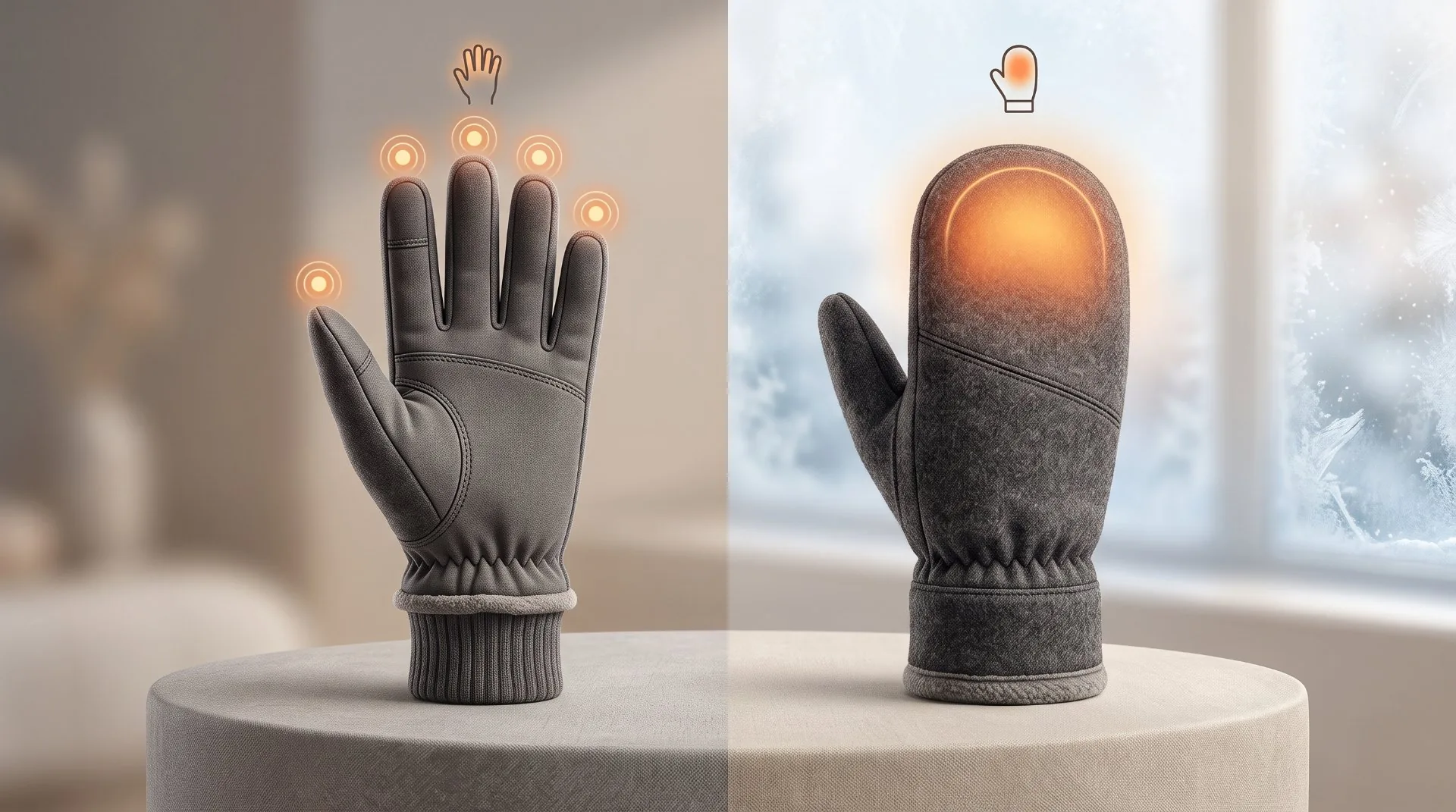
Neither arrangement is automatically better for every situation. They represent two different design priorities: finger independence versus shared finger space.
Why Finger Arrangement Matters for Warmth
Warm handwear works by reducing heat loss from the hands to the surrounding environment. Insulation slows heat transfer, while the enclosed air inside the handwear provides additional thermal resistance.
In a mitten, the fingers are grouped together rather than separated into individual compartments. This means the fingers occupy a shared enclosed space instead of being isolated from one another by material and insulation between each finger.
This arrangement can support the retention of warmth around the fingers. It is one reason mittens are commonly associated with warmth-focused cold-weather use.
However, finger arrangement is only one part of thermal performance. Insulation thickness, material, fit, wind resistance, moisture, and the overall construction of the handwear can be just as important.
Therefore, it would be inaccurate to assume that every mitten is warmer than every glove. A well-insulated glove can provide more protection than a poorly insulated mitten.
Gloves: When Finger Dexterity Matters
The strongest functional advantage of gloves is individual finger control.
Because the fingers are separated, gloves generally make precise hand movements easier. This can matter when you need to:
- Operate tools or equipment.
- Handle small objects.
- Use a touchscreen.
- Fasten zippers, buttons, or other closures.
- Grip objects using individual fingers.
- Perform work that requires detailed hand movements.
If you are comparing different glove designs specifically for Raynaud’s, see our guide to what gloves are best for Raynaud’s for a closer look at the factors that can affect handwear selection.
For people with Raynaud’s, this creates a practical trade-off. A glove can preserve the finger mobility needed for an activity, but separating the fingers also means that each finger occupies its own compartment rather than sharing one larger space.
Mittens: When Keeping the Fingers Together Matters
The principal advantage of mittens is the shared finger compartment.
With most of the fingers together, the handwear creates a different thermal environment from a conventional glove. The fingers remain in closer contact and within the same insulated space.
This can make mittens particularly practical during activities where detailed finger movement is not necessary, such as walking, standing outdoors, watching an outdoor event, or other relatively passive activities.
The trade-off is dexterity. Opening a zipper, manipulating a small object, or operating equipment can be more difficult when the fingers cannot move independently.
Gloves vs. Mittens for Raynaud’s
| Feature | Gloves | Mittens |
|---|---|---|
| Finger arrangement | Each finger separated | Most fingers share one compartment |
| Individual finger movement | High | Limited |
| Finger-to-finger warmth sharing | More limited | Greater potential because fingers remain together |
| Fine motor tasks | Generally easier | Generally harder |
| Warmth-focused design | Can provide strong protection with suitable insulation | Shared finger space can support heat retention |
| Tool use | Generally more practical | Less practical for precision tasks |
| Passive cold-weather use | Suitable | Often practical when dexterity is less important |
This table describes design tendencies rather than absolute performance. The warmth of a particular product depends on its complete construction, not simply whether it is called a glove or mitten.
Why “Warmer” Is Not the Only Question
For someone with Raynaud’s or cold-sensitive hands, choosing handwear involves more than maximizing insulation.
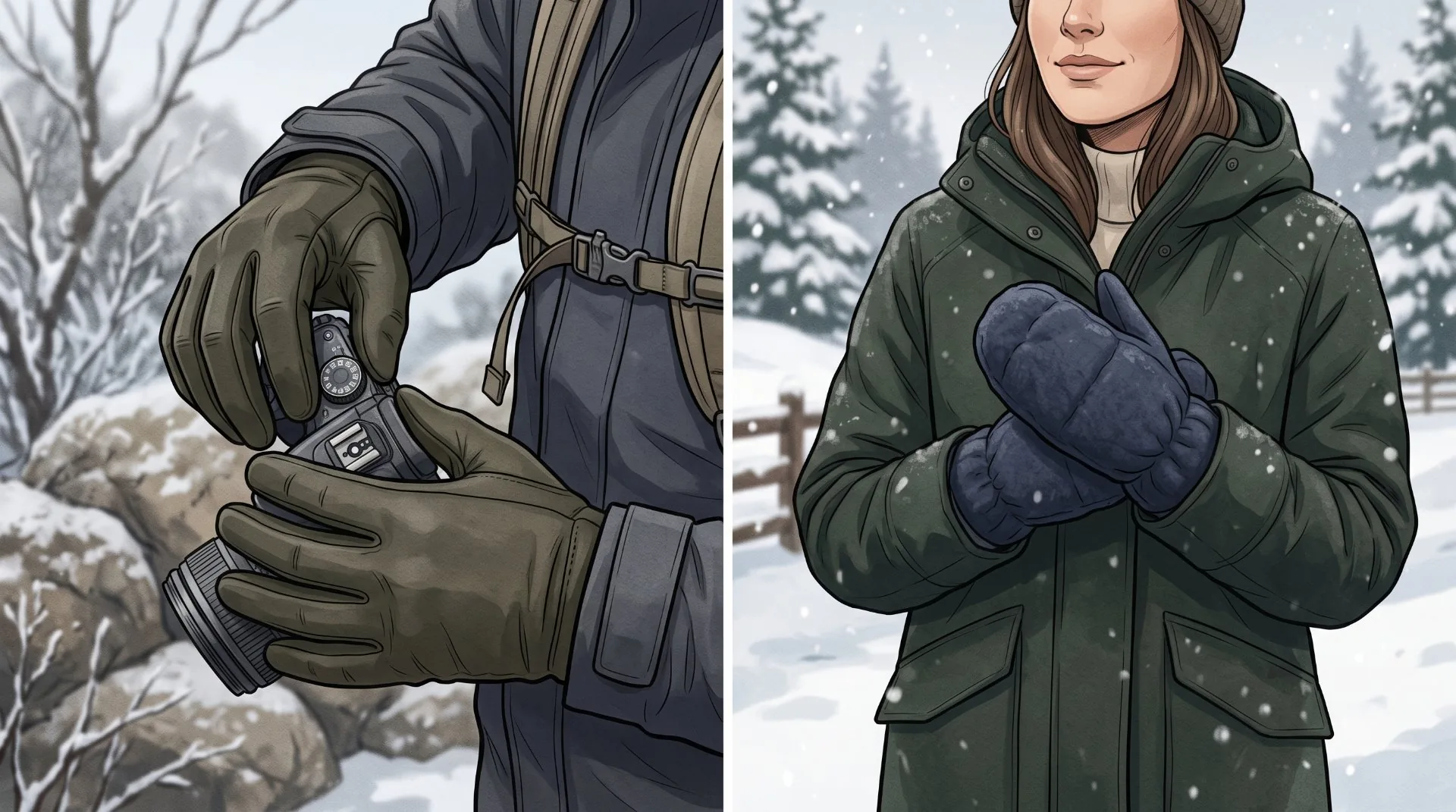
Consider a person who needs to operate equipment outdoors. A mitten may provide a useful shared finger space, but limited finger movement could make the task difficult. In that situation, the ability to use individual fingers becomes part of the handwear requirement.
Now consider someone standing outside with little need for hand movement. The priority may shift toward maintaining warmth for as long as possible, making the shared finger compartment of a mitten more relevant.
This balance between warmth and finger movement is also important when evaluating ways to keep Raynaud’s hands warm during everyday activities. Our guide on how to keep Raynaud’s hands warm without losing dexterity explores that trade-off in greater detail.
The same person may therefore reasonably choose different handwear for different situations.
Fit Can Change the Thermal Result
The glove-versus-mitten decision should also be considered together with fit.
Handwear that is too loose may allow cold air to enter more easily and reduce practical control. Handwear that is excessively tight can be uncomfortable and leave less room for insulating air or additional layers.
This is particularly relevant when layering. Adding a thin glove underneath a mitten can provide some finger control while preserving the shared outer compartment, but only if the combined layers fit comfortably.
In other words, more layers do not automatically mean better warmth. The complete handwear system needs to remain comfortable and functional.
Gloves, Mittens, and Cold Exposure
Handwear is one part of protecting the hands from cold. The American College of Rheumatology recommends keeping the hands and feet warm and specifically includes gloves or mittens among protective measures for people with Raynaud’s phenomenon.
Cold exposure is not limited to air temperature. Wind, moisture, contact with cold surfaces, and the length of exposure can all affect how quickly the hands lose heat.
For that reason, the most useful comparison is not simply “gloves versus mittens.” It is:
- How much warmth is required?
- How much finger movement is required?
- How cold and windy is the environment?
- How long will the hands remain exposed?
- Will the handwear remain dry?
Can Gloves and Mittens Be Combined?
They can sometimes be used as a layered system.
A thin glove underneath a mitten can provide some individual finger coverage and movement, while the outer mitten keeps the fingers together inside a larger insulated space.
This approach can be useful when both dexterity and warmth matter, but the combination should not make the handwear excessively tight.
What About Heated Gloves?
Heated gloves introduce another variable: the location of the heat source.
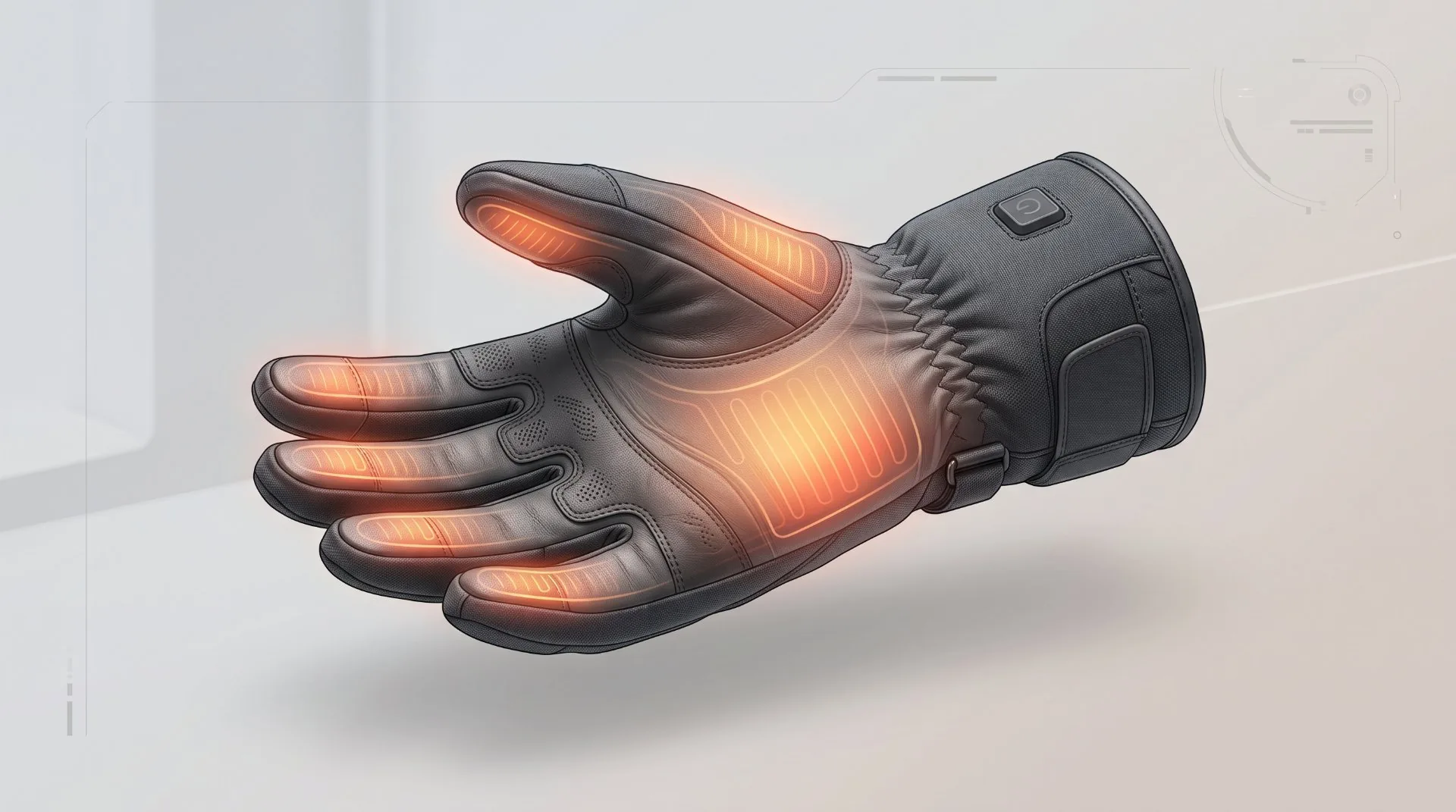
Unlike passive insulation, an electrically heated design actively adds heat through integrated heating elements. The relevant question therefore becomes not only whether the fingers are separated, but also where the heat is delivered and how evenly it reaches the hand.
A heated glove can preserve the dexterity of a conventional glove while adding active warming. A heated mitten can combine active warming with the shared finger compartment of a mitten.
For cold-sensitive hands, this means the glove-versus-mitten distinction remains useful, but it should be considered together with heating coverage, insulation, battery performance, and the intended activity.
Which Should You Choose for Raynaud’s?
There is no single glove design that fits every person or every cold-weather situation.
Choose gloves when individual finger movement is a major requirement. They are generally better suited to activities involving tools, small objects, touchscreens, or other precise movements.
Consider mittens when keeping the fingers together is more important than individual finger control. Their shared finger compartment can provide a useful arrangement for warmth-focused situations where detailed hand movements are limited.
For people with Raynaud’s, the practical choice is therefore a balance between thermal protection, dexterity, activity, and environmental exposure.
Most importantly, neither gloves nor mittens should be presented as a treatment for Raynaud’s. They are forms of cold protection. The appropriate choice depends on the conditions in which they are being used.
Frequently Asked Questions
Are mittens warmer than gloves for Raynaud’s?
Mittens keep most of the fingers together in one shared compartment, which can support heat retention around the fingers. However, actual warmth depends on insulation, materials, fit, wind protection, moisture, and construction. A mitten is not automatically warmer than every glove.
Are gloves or mittens better for finger movement?
Gloves generally provide greater finger-by-finger dexterity because each finger has its own compartment. Mittens limit individual finger movement by grouping most of the fingers together.
Why do people with Raynaud’s sometimes prefer mittens?
Mittens keep the fingers together rather than separating them into individual compartments. This shared space can support warmth retention, particularly when precise finger movement is not required.
Can I wear gloves under mittens?
Yes. A thin glove can sometimes be worn under a mitten to combine some finger dexterity with the shared outer compartment of the mitten. The combined layers should remain comfortably fitted rather than excessively tight.
Are heated gloves better than regular gloves for Raynaud’s?
Heated gloves add an active heat source rather than relying only on passive insulation. Their usefulness depends on factors such as heating coverage, heat distribution, insulation, fit, battery performance, and the conditions in which they are used. They should not be described as a treatment for Raynaud’s.
Should I choose gloves or mittens for outdoor activities?
Consider the activity first. Gloves may be more practical when precise finger control is required, while mittens may be more suitable when keeping the fingers together and maintaining warmth are higher priorities.
Do gloves or mittens treat Raynaud’s?
No. Gloves and mittens are forms of protection from cold and should not be presented as a treatment for Raynaud’s. People with persistent, severe, worsening, or concerning symptoms should seek appropriate medical advice.
Medical note: This article provides general educational information about Raynaud’s and is not intended to diagnose, treat, or replace professional medical advice. If symptoms are severe, persistent, worsening, or associated with sores or other concerning changes, consult a qualified healthcare professional.