

Raynaud’s attacks do not happen on a fixed schedule. Some people experience episodes only occasionally, while others may notice symptoms more frequently during certain situations, such as cold exposure or sudden temperature changes.
There is no universal number that defines how often Raynaud’s attacks should occur. Attack frequency varies between individuals and is influenced by personal sensitivity, environment, and exposure patterns.
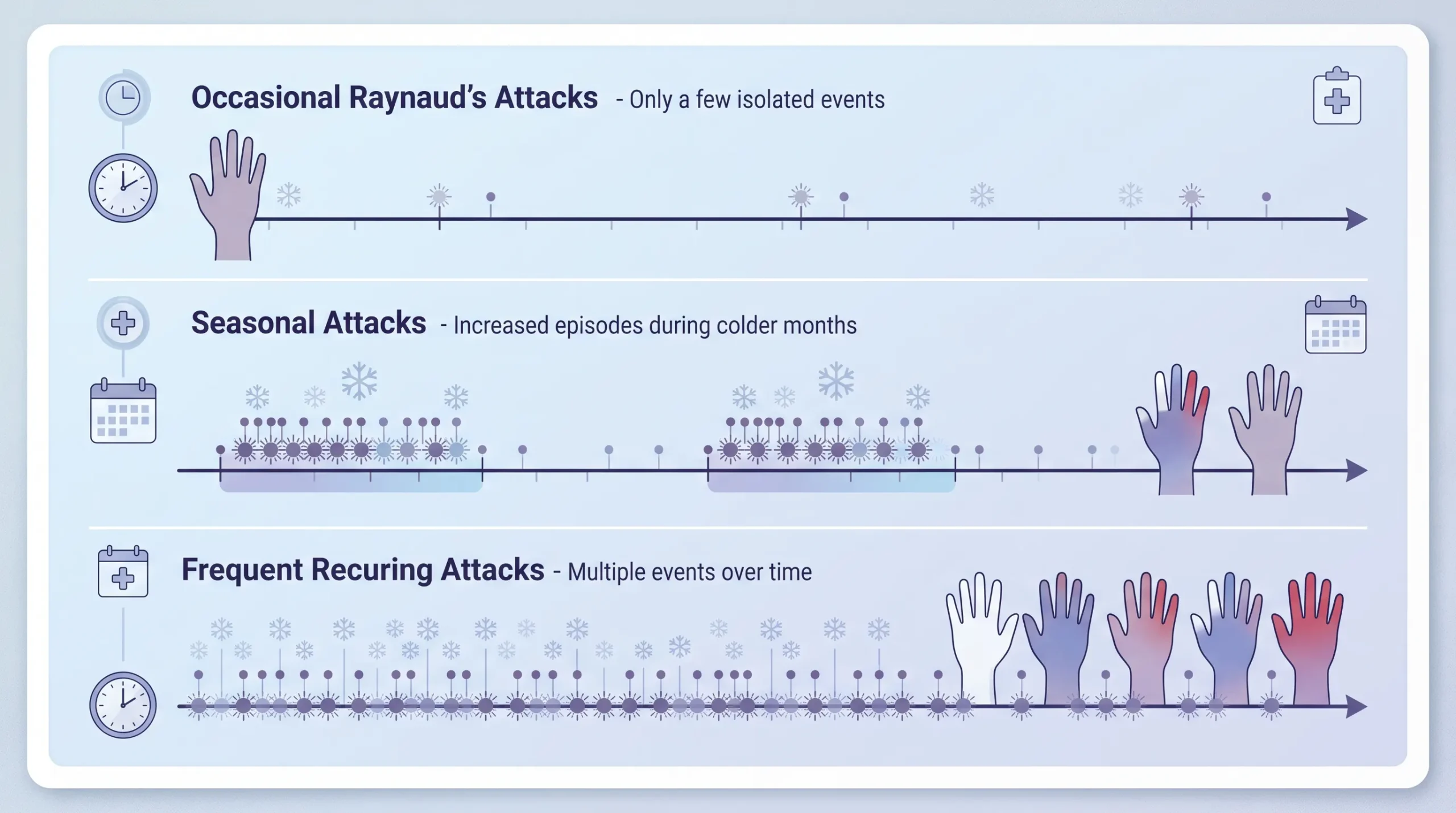
How Often Do Raynaud’s Attacks Usually Happen?
The frequency of Raynaud’s attacks can be very different from one person to another. Some people may experience occasional episodes only in specific situations, while others may notice repeated attacks during colder periods or when exposed to common triggers.
According to the American College of Rheumatology, Raynaud’s phenomenon involves episodes where small blood vessels in affected areas temporarily narrow in response to triggers such as cold or emotional stress. Because each person’s vascular response is different, the frequency of these episodes can also vary.
Attack frequency is not measured by a single standard that applies to everyone. A person’s own pattern over time is usually more meaningful than comparing their experience with someone else’s.
Is There a Normal Number of Raynaud’s Attacks?
There is no established number of Raynaud’s attacks per day, week, or month that is considered normal for every person. Some individuals may rarely experience symptoms, while others may notice repeated episodes during periods when triggers occur more often.
Raynaud’s attack frequency is usually understood as a personal pattern rather than a fixed measurement. The same person may also experience different patterns during different seasons or environments.
For example, someone may experience only occasional attacks during mild conditions but notice more frequent episodes during colder months or repeated temperature changes.
What Different Raynaud’s Attack Patterns Can Look Like
Although there is no universal frequency standard, people often describe their attack patterns in several general ways:
- Occasional attacks: Symptoms appear only in certain situations, such as specific cold environments or sudden temperature changes.
- Seasonal patterns: Attacks may become more noticeable during colder seasons when exposure to low temperatures increases.
- Frequent attacks: Some people experience repeated episodes when they encounter triggers more regularly in daily life.
These patterns do not define the severity of Raynaud’s by themselves. Frequency is only one part of understanding how the condition affects an individual.
What Factors Can Affect Raynaud’s Attack Frequency?
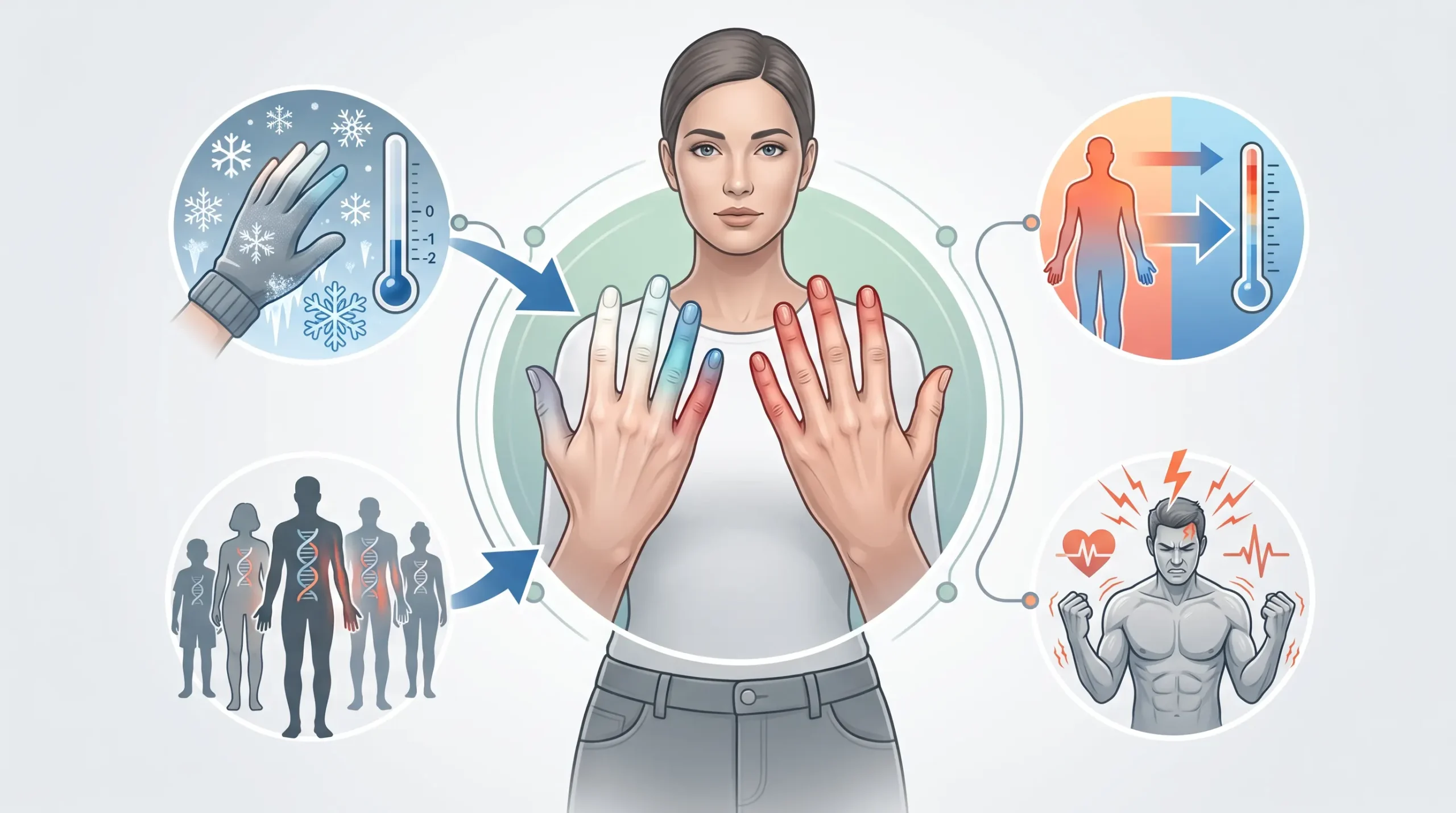
Several factors may influence how often Raynaud’s attacks occur. Common factors include:
- Cold exposure: Lower temperatures can increase the likelihood of an attack for many people. Learn more about common Raynaud’s triggers.
- Temperature changes: Moving between warm and cold environments may be associated with more frequent symptoms for some individuals.
- Stress responses: Emotional stress can be associated with vascular responses that may contribute to episodes.
- Seasonal conditions: Some people notice different attack patterns during colder months.
- Individual sensitivity: People vary in how strongly their blood vessels respond to environmental changes.
Because these factors differ between individuals, two people with Raynaud’s may experience very different attack frequencies even in similar conditions.
Can Raynaud’s Attack Frequency Change Over Time?
Some people notice that their attack frequency changes at different times. These changes may be related to differences in environment, daily routines, seasonal conditions, or exposure to known triggers.
A change in frequency does not always indicate the same cause for every person. Understanding the context around these changes is important when looking at personal patterns.
If your usual pattern changes noticeably or new symptoms appear, discussing these changes with a healthcare professional can help determine whether further evaluation is appropriate.
Why Tracking Raynaud’s Attack Patterns Can Be Helpful
Keeping track of when attacks happen can provide useful information about personal patterns. A simple record may include:
- When the attack occurred
- Possible environmental conditions
- Temperature changes before symptoms appeared
- How long the episode lasted
- Which fingers or areas were affected
Tracking patterns does not predict exactly when an attack will happen, but it can help describe how Raynaud’s symptoms relate to different situations.
The length of each episode is a separate factor from frequency. Learn more about how long Raynaud’s attacks last.
Is Frequent Raynaud’s Always a Sign of a More Serious Problem?
Attack frequency alone does not determine the type or severity of Raynaud’s. Some people may experience recurring episodes, while others may have fewer attacks depending on their individual situation.
The National Health Service (NHS) notes that people with new or unusual Raynaud’s symptoms may need medical assessment.
Understanding changes in attack frequency is different from determining whether Raynaud’s itself is becoming worse. For more information about symptom changes over time, see whether Raynaud’s can get worse.
How Understanding Attack Frequency Can Help With Daily Planning
Recognizing personal attack patterns can help people better understand how their symptoms relate to different environments and situations.
For some people, noticing when attacks are more likely to occur can provide useful context when considering warmth strategies for different daily conditions. Learn more about ways to keep hands warm with Raynaud’s.
Frequently Asked Questions
How often do Raynaud’s attacks happen?
There is no standard frequency for Raynaud’s attacks. Some people experience occasional episodes, while others may have attacks more frequently depending on triggers, environment, and individual sensitivity.
Is there a normal number of Raynaud’s attacks per day?
There is no established daily number that defines Raynaud’s attacks as normal or abnormal. Frequency varies between individuals and depends on personal patterns and exposure to triggers.
Why do some people have Raynaud’s attacks more often?
Differences in temperature exposure, environmental conditions, stress responses, seasonal changes, and individual sensitivity can affect how frequently attacks occur.
Can Raynaud’s attacks happen every day?
Some people may experience symptoms frequently, including during repeated exposure to triggers. However, daily attacks are not a universal pattern and vary between individuals.
Should I worry if my Raynaud’s attacks become more frequent?
A noticeable change from your usual pattern or the appearance of new symptoms may be worth discussing with a healthcare professional.
Medical note: This article provides general educational information about Raynaud’s and is not intended to diagnose, treat, or replace professional medical advice. If you experience new, severe, or concerning symptoms, consult a qualified healthcare professional.