

Raynaud’s is often described as affecting the fingers, but the pattern is not always identical for everyone. Some people may notice changes in only one finger, several fingers, or one hand more than the other during an episode.
The location of symptoms can provide useful information about how Raynaud’s appears, but the distribution alone does not determine the cause. Understanding whether symptoms are occasional, consistent, or unusually limited to one area is an important part of understanding Raynaud’s patterns.
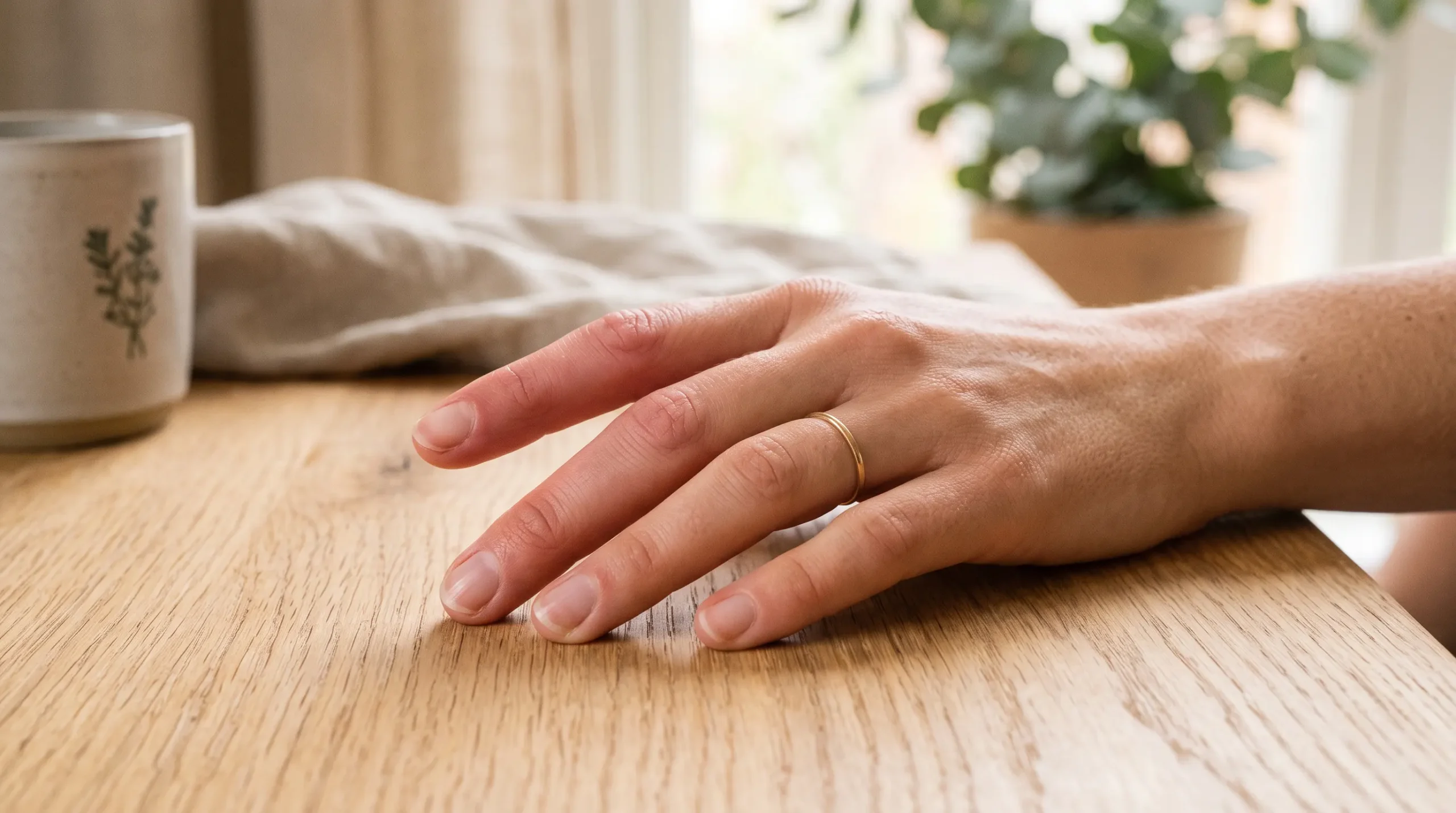
Can Raynaud’s Affect Only One Finger?
Yes, Raynaud’s can sometimes affect only one finger or a small number of fingers during an episode.
Raynaud’s episodes occur when blood vessels in affected areas temporarily narrow, reducing blood flow to those areas. Because this response can vary between fingers, not every finger must necessarily be affected in the same way or at the same time.
One finger may appear colder, change color, or feel different from the others during an episode. The pattern may also change from one episode to another.
For a broader overview of the different symptoms that may occur, see What Are the Symptoms of Raynaud’s?.
Can Raynaud’s Affect Only One Hand?
Raynaud’s can affect one hand more noticeably than the other, especially during individual episodes.
The fingers on one hand may show more obvious color changes or sensations of coldness, while the other hand may have milder symptoms or no noticeable changes at that moment.
However, symptoms that repeatedly occur only on one side of the body follow a different pattern from the more common experience of Raynaud’s affecting both hands.
The NHS notes that Raynaud’s symptoms affecting only one side of the body can be a reason to seek medical advice, particularly when the pattern is new or unusual.
Why Can One Finger React Differently From Another?
Not every finger responds to cold exposure in exactly the same way. Differences in blood vessel response, temperature exposure, hand position, and individual anatomy can influence how symptoms appear.
This means that during one episode, one finger may become colder or show more visible changes than another finger.
A difference between fingers during occasional episodes does not automatically mean that something unusual is happening. The overall pattern, including whether the same area is repeatedly affected, is more important.
Is Raynaud’s Usually Symmetrical?
Many people with Primary Raynaud’s experience symptoms in both hands, although the severity may not be exactly the same on each side.
One hand may appear more affected during a particular episode, while both hands may be involved at other times.
The distinction between Primary and Secondary Raynaud’s is important because symptom patterns can differ. For more information about these two forms, see Primary vs. Secondary Raynaud’s.
Does Raynaud’s Only Affect the Fingers?
Although fingers are the most commonly affected areas, Raynaud’s can also involve other extremities, including toes.
Some people may notice symptoms beyond their fingers, while others may mainly experience changes in one area.
The distribution of symptoms can therefore vary between individuals. Future content will explore how Raynaud’s may affect other areas beyond the fingers.
When Is a One-Sided Pattern Different From Typical Raynaud’s?
A single episode affecting one finger or one hand does not necessarily indicate a different condition. Temporary differences between sides can occur.
However, a pattern that consistently affects only one side, especially when it is new, persistent, or accompanied by other changes, may deserve medical attention.
Examples of changes worth discussing with a healthcare professional include:
- Raynaud’s symptoms repeatedly occurring only on one side
- a new pattern that is different from previous episodes
- persistent symptoms that do not resolve as usual
- new skin or tissue changes
The purpose of evaluation is to understand the overall pattern rather than assuming that one symptom location has a specific explanation.
If you are unsure whether a change in your Raynaud’s symptoms needs medical attention, see When Should You See a Doctor About Raynaud’s?.
Can Raynaud’s Symptoms Change Location Over Time?
Yes. The areas affected during Raynaud’s episodes can vary between different situations.
Someone may notice that certain fingers are more commonly affected during one period, while other fingers become involved at another time.
Changes in location alone do not necessarily mean that Raynaud’s is becoming worse. A broader change in frequency, severity, duration, or associated symptoms provides more useful context.
For more information about changes in symptom patterns over time, see Can Raynaud’s Get Worse Over Time?.
Can Raynaud’s Affect Only One Finger or Hand? The Short Answer
Yes, Raynaud’s can affect only one finger or one hand during an episode, although many people experience symptoms in multiple fingers or both hands. Occasional differences between sides can happen, but symptoms that consistently appear only on one side or follow a new unusual pattern may need further evaluation.
Frequently Asked Questions
Can Raynaud’s affect only one finger?
Yes. Raynaud’s can sometimes affect one finger or a small number of fingers during an episode, although other episodes may involve different areas.
Can Raynaud’s affect only one hand?
One hand may be more noticeably affected during an episode, but symptoms that consistently occur only on one side may deserve further evaluation.
Is Raynaud’s usually in both hands?
Many people with Primary Raynaud’s experience symptoms in both hands, although the severity may differ between sides.
Why does one finger get colder than the others?
Different fingers may respond differently because blood vessel reactions and exposure conditions can vary between areas of the hand.
Can Raynaud’s symptoms move from one finger to another?
Yes. The fingers affected can vary between episodes, and changes in location alone do not necessarily mean that Raynaud’s is worsening.
When should I seek medical advice about one-sided Raynaud’s symptoms?
Consider medical advice if symptoms consistently affect only one side, represent a new pattern, persist longer than usual, or occur with new skin or tissue changes.
Medical note: This article provides general educational information about Raynaud’s and symptom distribution and is not intended to diagnose, treat, or replace professional medical advice. Unusual, persistent, or changing symptoms should be evaluated by a qualified healthcare professional.